
Drag Rivals: Tuning & Racing
RETROBOT s.r.o.Racing
4.315.00 Reviews
- Version
- 0.9.2
- Installs
- 10.00K
- Age Rating
- Everyone
Screenshots




Our Review of Drag Rivals: Tuning & Racing
 Analysis by Appyee
I spent time with Drag Rivals: Tuning & Racing as a quick-fire mobile racing game, and my first impression was clear: this is built for people who enjoy the tension of a straight-line launch more than the complexity of steering through a long circuit. The appeal comes from preparing a car, making a run, and trying to improve the result through better decisions rather than simply holding an accelerator button.
That focus gives the game an immediately understandable identity. It is a free racing title from RETROBOT s.r.o., rated for Everyone, with a compact format that suits short sessions. The game has an average rating of 4.3 from around 118 ratings, and its presentation suggests a project still developing rather than a huge, fully established racing platform. I found that encouraging in some ways, because the basic idea is easy to approach, but it also means patient players should judge the current experience on what is available now instead of assuming every expected feature is already in place.
How the current racing experience feels
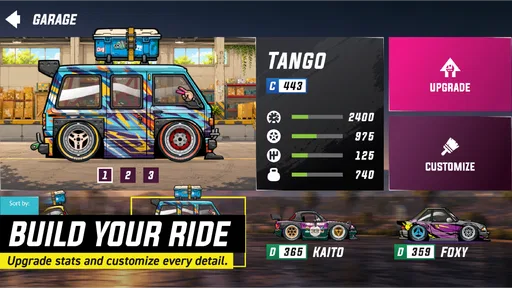
The central loop is simple to understand: customise a car, tune it, and take it into drag battles. In practice, that creates a different rhythm from a conventional mobile racer. There is less emphasis on learning a complicated track and more emphasis on preparing correctly, reacting at the right moment, and understanding why one setup performs better than another.
I like that this format makes each attempt feel focused. A short race can work as a break between other tasks, yet a close result gives me a reason to try again immediately. The game does not need a long event structure to create tension; the small decisions before and during a run are enough to make a rematch feel worthwhile.
The strongest audience is someone who enjoys cars as projects. If you like comparing parts, adjusting a build, and testing whether a change actually helps, the tuning side should give the races more meaning. If you only want a relaxed driving game where you explore roads, brake into corners, and admire scenery, this is probably not the right type of racer for you.
That distinction matters because drag racing can look limited from the outside. There is no need to steer through a winding course, so the satisfaction comes from optimisation. I found myself paying more attention to preparation and timing than I would in an arcade racer. The game works best when I treat a loss as information about the car rather than as a reason to repeat the same run without changing anything.
Why the short format works on a phone
Drag Rivals fits the kind of session many people actually have on a phone. I can open it while waiting for an appointment, complete a few races, and stop without losing the feeling that I made progress. That is more convenient than a racing game that expects a long uninterrupted event or demands constant concentration for several minutes.
A realistic everyday use case is a short evening session after work. I might have enough time for a few attempts but not enough energy for a full campaign. Here, I can inspect the car, make one adjustment, race, and decide whether the result justifies another change. The compact structure makes the game easier to return to than a title that requires remembering a large map or a complicated control layout.
The trade-off is that repeated drag runs can become predictable if the tuning choices do not keep changing the way the car behaves. Players who need varied tracks, traffic, weather, or open-world exploration may feel that the format becomes narrow. My enjoyment depended on whether I was actively experimenting. When I approached it as a passive button-pressing game, the appeal dropped quickly.
Tuning is more interesting when treated as a process
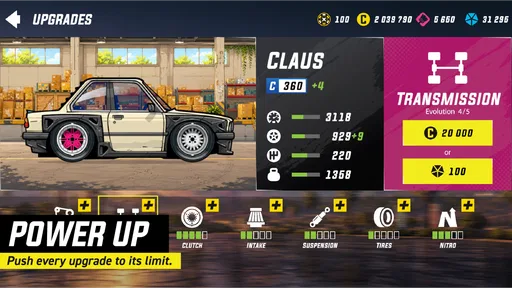
The most useful way I found to approach the garage was to avoid changing everything at once. A better routine is to alter one aspect of the setup, race again, and remember what improved or worsened. That makes the tuning screen feel like a practical tool rather than a collection of upgrades that I simply apply whenever they become available.
This is also where the game can reward players who are willing to slow down. A faster-looking car is not automatically a better solution for every situation. If a change improves potential performance but makes the launch harder to manage, the result may be worse in actual races. I recommend keeping a mental note of the setup that feels dependable, then testing more ambitious changes from that baseline.
One non-obvious advantage of this approach is that it prevents wasted resources. In a game with customisation and purchases, spending immediately can hide whether the real problem is the car, the setup, or the timing. I would first repeat a race with the current build, identify the point where the run fails, and only then decide whether a garage change is justified.
That advice is especially useful for new players. The store price is free, but the game includes in-app purchases ranging from $1.99 to $99.99 per item. I would not rush toward spending simply because a rival feels difficult. The better habit is to learn the existing car and determine whether a paid improvement would solve a genuine limitation or merely shorten the learning process.
What the current version tells us
The current version is 0.9.2, while the game was released on May 21, 2026. Those details place the experience in an early stage of its life, and that context shapes my recommendation. I see a foundation aimed at quick drag battles, tuning, and repeat attempts, but I would approach it as a developing game rather than a finished alternative to the biggest racing names on mobile.
For an existing player, an early version can be appealing because the core direction is visible and future refinement may make the experience smoother. It can also be frustrating if you expect a broad amount of content immediately. The important question is whether the basic loop already gives you enough reason to race today. In my view, it does for players who enjoy compact competition and mechanical experimentation, but not for anyone looking for a complete racing catalogue.
I would also keep expectations realistic about evolution. A version number can show that the game is still moving forward, but it does not guarantee a particular feature, balance change, or content schedule. I would watch how future updates improve the relationship between tuning and racing rather than assuming that more cars or more purchases alone would make the game better.
The developer, RETROBOT s.r.o., has chosen a focused concept instead of presenting this as a general driving simulator. That focus is valuable if it leads to meaningful differences between builds. The game will be more convincing over time if every garage decision has a visible consequence and if races continue to test judgement rather than simply demanding repeated upgrades.
Where new players may feel friction
The first challenge is understanding what a loss is trying to teach. In a traditional circuit racer, I can often see whether I braked too late or took a corner badly. In a drag battle, the cause may be less obvious. A poor result can come from preparation, timing, or a mismatch between the car and the opponent, so beginners may need several attempts before the lesson becomes clear.
My practical suggestion is to make small changes and compare outcomes rather than rebuilding the car after every defeat. If the game gives you a choice between improving the vehicle and refining your execution, test the execution first. That keeps the early experience affordable and helps you understand the system before you commit to upgrades.
Another possible friction point is the narrow nature of the racing format. The game’s identity is also its limitation. There is no reason to choose it over a circuit racer if what you want is cornering technique, route discovery, or a sense of travelling through a world. I would choose this title for focused acceleration battles, not as my only racing game.
The Everyone content rating makes it approachable for a broad audience, but accessibility does not mean the progression will suit every age or play style. Younger players may enjoy the immediate races, while players who dislike competition based on repeated optimisation may lose interest. The game is easy to start; it is not necessarily equally satisfying for people who do not enjoy refining a result.
How it compares with familiar mobile racers
Compared with an arcade racer built around drifting and track layouts, Drag Rivals feels more deliberate before the race and more concentrated during it. A circuit game gives me many visible driving variables at once: steering, braking, overtaking, and line choice. Here, the decision space is smaller, but each preparation choice can feel more important because there are fewer distractions.
Compared with a simulation-style title, it is easier to pick up for a short session. I do not need to learn a large control scheme before enjoying the basic idea. The downside is that players seeking realistic handling or long-form motorsport structure may find the experience too specialised.
It also differs from a purely casual racer because the garage matters. I am not only chasing a faster reaction; I am trying to understand how the car’s preparation affects the run. That gives the game more staying power than a sequence of identical races, provided the tuning choices remain meaningful and the progression does not become dominated by spending.
For me, the best comparison is not “which racing game is the most complete?” but “what kind of racing mood do I want right now?” If I want a quick contest with a clear objective, this game is a good fit. If I want exploration, visual spectacle, or a large variety of driving situations, I would pick a different category of racer.
Spending, progression, and sensible habits
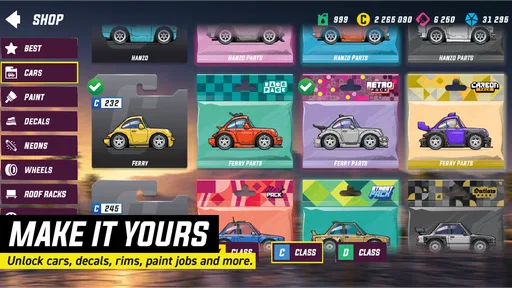
Because the game is free to start and offers individual purchases from $1.99 to $99.99, I would treat the shop as something to evaluate carefully rather than as part of the opening tutorial. The most important question is whether I am buying a meaningful change to the way I play or simply removing a period of experimentation.
A useful personal rule is to wait until I understand why my current setup is failing. If I cannot explain the problem, a purchase is unlikely to feel satisfying. If I can identify a specific weakness and still enjoy the game, then I can make a more informed decision about whether optional spending is worthwhile.
This approach also protects the competitive side of the experience. Drag battles are most satisfying when the result feels connected to my decisions. If progress becomes a matter of selecting the strongest available purchase without learning the mechanics, the game loses the very tension that makes tuning interesting.
I would recommend the game to players who are comfortable with free-to-play design and willing to set their own spending limit. I would skip it if any optional purchase model immediately makes a racing game feel uncomfortable, because the shop is part of the overall experience even when I choose not to use it.
What existing users should watch as the game develops
For current players, I would watch three areas. First, the balance between tuning and driving skill should remain healthy. A good update would make garage choices clearer without turning every race into a simple upgrade check. Second, the game needs enough variety in its battles to keep repeat attempts meaningful. Third, the early experience should explain its systems well enough that a new player can learn without guessing.
I would also pay attention to whether the game’s progression respects short-session players. Its strongest quality is convenience, so future changes should not bury the quick race loop beneath unnecessary complexity. More depth would be welcome, but only if it supports the central drag-racing idea instead of distracting from it.
There is a promising balance to preserve. The game can grow through more meaningful customisation and better feedback while remaining approachable. If development moves too far toward a large, demanding racing platform, it could lose the simplicity that currently makes it useful for quick sessions. If it stays too narrow, experienced players may run out of reasons to experiment.
That is why I would judge future progress by quality of decisions, not just quantity of content. A new car is useful when it creates a different tuning problem. A new race is useful when it tests something beyond repeating the same launch. A clearer explanation is useful when it helps me understand a defeat without removing the need to practise.
My recommendation after playing
Drag Rivals: Tuning & Racing is worth trying if you want a focused mobile racing game built around car preparation and quick drag battles. I enjoyed the way a short race could become a small experiment: change one thing, make another run, and decide whether the result came from the machine or from my own timing.
I would recommend it most strongly to players who like garage systems, incremental improvement, and repeatable challenges. It is also a sensible choice for someone who wants a racing game that can fit into brief daily sessions. The free entry point makes it easy to test the core idea before deciding whether it deserves a place on your phone.
I would be more cautious for players expecting a full circuit-racing experience, a large open world, or a polished long-term campaign. The early version and specialised format mean that the game asks you to enjoy its central loop rather than offering every type of racing content at once.
My final advice is to play patiently, tune gradually, and avoid treating purchases as the automatic answer to a difficult opponent. The real appeal is learning why a run succeeds, not merely making the car stronger. If that kind of focused improvement sounds satisfying, this is a promising free racing game to explore; if you need variety above all else, a broader racer will probably serve you better.
Verdict
Strengths of Drag Rivals: Tuning & Racing
- Deep tuning options let you personalize both appearance and performance.
- Short races make it easy to enjoy a quick session on mobile.
- Competitive events provide extra goals beyond standard races.
- Responsive controls feel accessible for beginners and satisfying to master.
- Vehicle upgrades create a clear sense of progression over time.
Limitations of Drag Rivals: Tuning & Racing
- Progress may feel slow without spending resources or replaying races.
- Some tuning choices can be confusing for players new to car customization.
- Repeated tracks and race formats may reduce variety during longer sessions.
- Online competition can feel uneven when facing better-upgraded vehicles.
- Ads or in-app purchases may interrupt the overall racing experience.
Similar Picks in This Category
View All
Hill Climb Racing
Fingersoft4.3

Dr. Driving
SUD Inc.4.2

Traffic Rider
skgames4.5

Asphalt 8 - Car Racing Game
Gameloft SE4.6

Race Master 3D: Car Racing
Beresnev Games4.6

Extreme Car Driving Simulator
AxesInMotion Racing4.3
Frequently Asked Questions
What is Drag Rivals: Tuning & Racing?
Drag Rivals: Tuning & Racing is a mobile racing game focused on short, competitive drag races and vehicle customization. Players can choose and upgrade cars, adjust their performance, and compete through increasingly difficult events. The game combines quick races with tuning and progression, making it suitable for players who enjoy improving a car and testing it against rivals rather than driving through long open-world circuits.
Can I play Drag Rivals: Tuning & Racing offline?
Some parts of Drag Rivals: Tuning & Racing may be available without a continuous internet connection, particularly basic menus or previously loaded content, but online features can require connectivity. Multiplayer competitions, leaderboards, advertisements, cloud services, events, and certain rewards may not work offline. It is best to connect to the internet when launching the game, updating content, or participating in competitive activities.
Does Drag Rivals: Tuning & Racing include in-app purchases?
Yes, players should expect optional in-app purchases in Drag Rivals: Tuning & Racing. These may include premium currency, upgrade materials, special vehicles, bundles, or advantages that help speed up progression. The game can generally be explored without paying, but advancing quickly or collecting certain content may require patience or spending. Parents should also review device purchase settings before allowing children to play.
What can I customize or upgrade in Drag Rivals: Tuning & Racing?
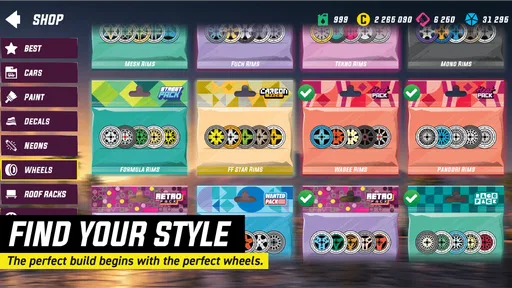
Customization and performance upgrades are central to the experience. Depending on the available progression system, players can improve areas such as acceleration, top speed, shifting performance, grip, and other racing statistics. Visual options may also be available for personalizing a vehicle. Choosing upgrades carefully matters because a faster car is not always enough; matching improvements to the race type and your driving timing can produce better results.
Is Drag Rivals: Tuning & Racing suitable for casual players?
Drag Rivals: Tuning & Racing can suit casual players because races are usually short and easy to start, making it possible to enjoy a few events during a quick break. However, later progression may demand better timing, strategic upgrades, and repeated attempts. Players who prefer relaxed racing should be comfortable with gradual improvement, occasional waiting or reward systems, and the possibility of advertisements or competitive difficulty.
Play our best games!


